Published by Circle Early Years Consultancy
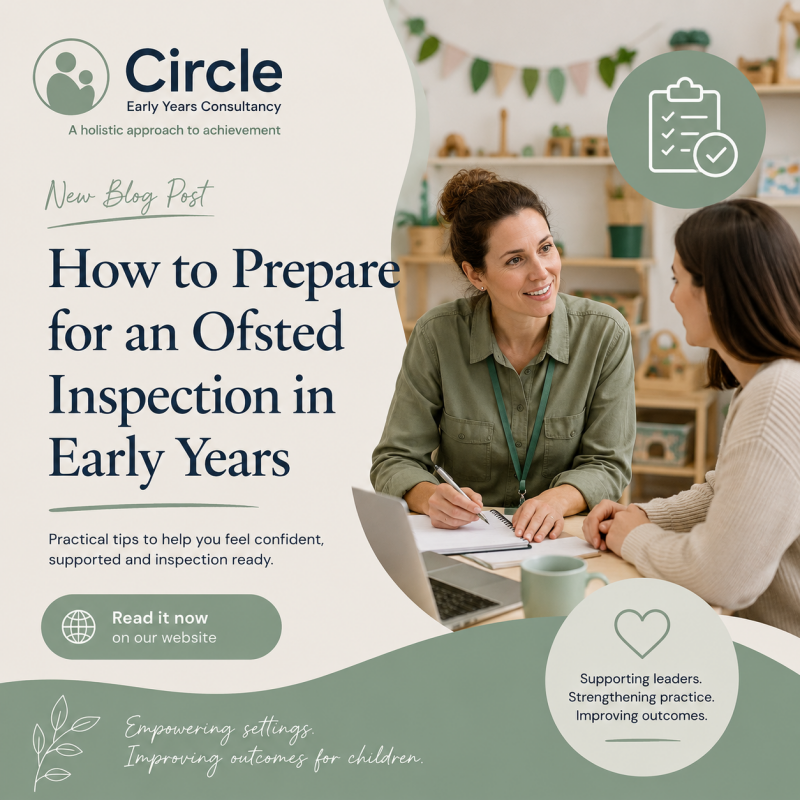
How to Prepare for an Ofsted Inspection in Early Years
If there is one thing I say repeatedly to nursery leaders, it’s this:
Preparing for Ofsted should never feel like performing.
The strongest inspections happen when leaders and practitioners understand why they do what they do, can confidently talk about children’s experiences, and have systems that genuinely work day-to-day — not just for inspection week.
That said, inspections can feel incredibly stressful.
And with the recent changes to the Ofsted framework, many early years providers are understandably feeling uncertain about what inspectors will now focus on.
The good news?
The fundamentals of strong early years practice have not changed.
Children still need:
- warm, responsive relationships
- emotionally available adults
- meaningful learning experiences
- safe and inclusive environments
- confident leadership
- reflective practice
The challenge is ensuring your setting can clearly demonstrate this consistently.
Understand the New Ofsted Changes
Ofsted inspections are changing significantly.
The move away from single-word judgements means settings are now being looked at across multiple areas rather than simply receiving one overall grade. The new report card system aims to give a broader picture of quality and practice.
There is also increased focus on:
- inclusion
- leadership and staff wellbeing
- safeguarding culture
- children’s emotional wellbeing
- consistency of practice
- how effectively leaders identify and address weaknesses
Early years providers will also be inspected more frequently moving forward.
For many settings, this means inspection readiness can no longer be something addressed “when due.”
It needs to become part of everyday practice.
1. Know Your Setting Deeply
Strong leaders know:
- what is working well
- what still needs development
- where inconsistencies exist
- which children may need additional support
- what staff confidence levels are like
Inspectors do not expect perfection.
What they do expect is reflective leadership.
You should be able to confidently explain:
- your curriculum intentions
- how children make progress
- how you support communication and language
- how you support behaviour and emotional wellbeing
- your approach to inclusion and SEND
- how safeguarding works in practice
- how you evaluate quality
If you are unsure how to answer these questions yourself, staff are likely to feel unsure too.
2. Focus on Safeguarding Culture — Not Just Policies
Many settings have safeguarding folders full of paperwork.
But inspectors are far more interested in:
- whether staff recognise concerns
- whether they act appropriately
- whether children are emotionally safe
- whether safeguarding is embedded in everyday practice
Inspectors may explore:
- professional curiosity
- staff understanding of local safeguarding risks
- safer recruitment
- supervision processes
- whistleblowing culture
- online safety
- behaviour management
- how concerns are escalated
Staff should not sound rehearsed.
They should sound knowledgeable and confident.
3. Make Sure Staff Understand the “Why”
One of the biggest issues I see during mock inspections is practitioners describing what they do — but not why they do it.
For example:
- Why are transitions organised in a particular way?
- Why are resources accessible?
- Why is small-group time used?
- Why are care routines important learning opportunities?
- Why is the environment arranged as it is?
Ofsted are increasingly interested in intentional practice.
Confident practitioners can explain:
- child development reasoning
- attachment-informed practice
- how routines support emotional security
- how interactions support language development
- how they adapt for individual children
4. Ensure Your Curriculum Is Realistic and Embedded
Your curriculum should reflect:
- your children
- your community
- your values
- your provision
Inspectors are not looking for complicated paperwork or overly academic approaches.
They are looking for:
- meaningful learning
- strong interactions
- clear progression
- communication-rich environments
- children who feel secure and engaged
Ask yourself:
Could every practitioner explain what we want children to learn here?
If the answer is no, your curriculum may exist more on paper than in practice.
5. Prepare Staff Emotionally as Well as Professionally
Inspection anxiety is real.
Many excellent practitioners completely lose confidence during inspection because they fear “getting it wrong.”
Preparation should not increase panic.
Good inspection preparation:
- builds confidence
- clarifies expectations
- reduces uncertainty
- strengthens consistency
- helps staff feel professionally valued
The aim is not to create robotic answers.
The aim is for practitioners to feel secure enough to talk naturally and professionally about their work.
6. Don’t Ignore Leadership and Team Culture
Increasingly, inspectors are interested in:
- staff wellbeing
- workload
- support systems
- supervision
- communication
- professional development
Tired, unsupported teams often show signs of strain during inspection.
Strong leadership is visible in:
- calm environments
- respectful relationships
- clear expectations
- emotionally attuned interactions
- reflective practice
- confident staff
7. Carry Out a Genuine Mock Inspection
A strong mock inspection should do more than identify paperwork gaps.
It should:
- replicate inspection pressure
- identify staff confidence levels
- test safeguarding understanding
- explore leadership knowledge
- evaluate the curriculum in action
- identify inconsistencies across rooms
- highlight operational risks before Ofsted does
The most valuable mock inspections are honest, supportive and developmental — not performative or fear-based.
Final Thoughts
Preparing for Ofsted is not about becoming a different setting for two days.
It is about:
- understanding your provision deeply
- strengthening consistency
- supporting staff confidence
- ensuring children genuinely experience high-quality care and education every day
When settings focus only on “passing inspection,” important things can get lost.
But when leaders focus on children, relationships, reflective practice and strong professional culture, inspection readiness tends to follow naturally.
Need Support Preparing for Inspection?
Preparing for Ofsted can feel overwhelming — particularly with the recent changes to inspection approaches and reporting.
At Circle Early Years Consultancy, I offer practical early years consultancy and mock inspection support based on my experience as a former Ofsted Early Years Regulatory Inspector.
Support can include:
- mock Ofsted inspections (“Mocksted” visits)
- safeguarding reviews and training
- leadership support
- curriculum and quality reviews
- staff confidence building
- action planning following inspection feedback
My approach is always supportive, realistic and tailored to your setting — helping teams feel more confident, prepared and clear about next steps.
If you would like an informal conversation about how I may be able to help your setting, please feel free to get in touch.
For official Ofsted guidance and inspection information, visit:
- Understanding Ofsted report cards and grades
- Ofsted inspections for childcare providers
- Carrying out childcare register inspections
- Ofsted to inspect early years providers more frequently
Written by Zoe Duggan

Add comment
Comments